
Formative assessment · Classroom practice
Formative Assessment: 12 Quick Ways to Check for Understanding in Any Lesson
12 practical formative assessment techniques to check every student's understanding in minutes, with age ranges, timings and device-free ideas.
By Ivailo Ivanov, Teacher
· 9 min read
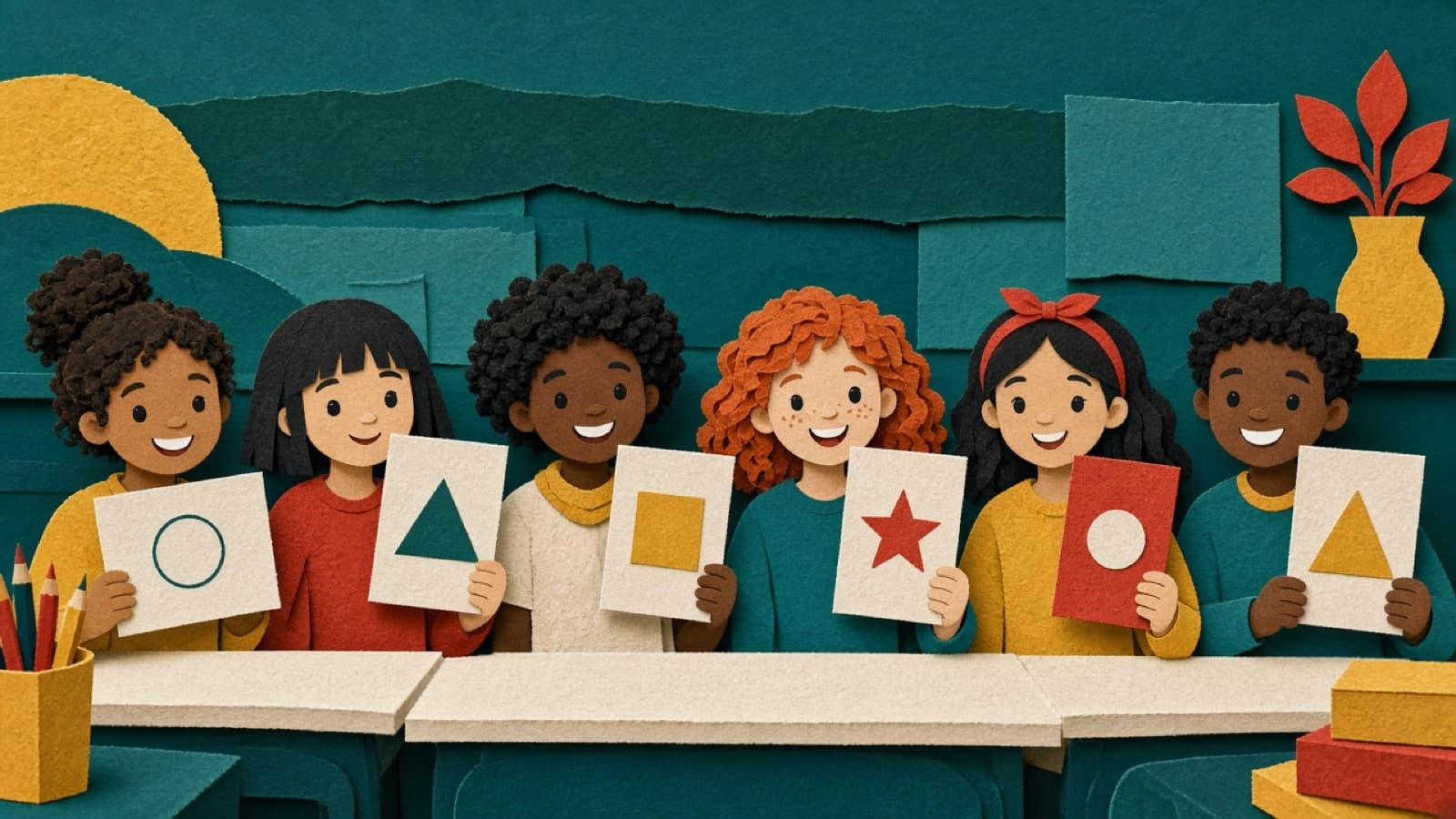
You finish explaining a new idea, look at the class and ask: "Any questions?" Silence. A few nods. You move on, and two days later the homework shows that half the class never understood it.
The problem is not the class. "Any questions?" only tells you that nobody wanted to speak first. To know what children actually understood, every child needs to give an answer you can see. That is what formative assessment is for, and it does not need to take more than a minute or two.
This guide explains what formative assessment is, why it works, and 12 quick techniques you can use tomorrow, with the age range, time and what each one tells you. Most of them need nothing more than paper.
What is formative assessment?
Formative assessment is any check on learning that happens during teaching and changes what you do next. If the answers lead you to re-explain, regroup children or move on faster, it was formative. If the result only goes into a grade book, it was not.
| Formative assessment | Summative assessment | |
|---|---|---|
| When | During a lesson or unit | At the end of a unit, term or year |
| Purpose | Decide what to teach next | Measure what was learned |
| Typical form | Quick questions, cards, exit tickets | Tests, exams, projects |
| Graded? | Usually not | Usually yes |
| Who uses the result | Teacher and pupils, straight away | Teacher, school, parents, later |
The same question can be either. A five-question quiz at the start of a lesson is formative if you use it to decide where to begin, and summative if it only produces a mark.
Why checking for understanding works
Three bodies of evidence point the same way.
- Black and Wiliam's review. In Inside the Black Box (1998), Paul Black and Dylan Wiliam reviewed classroom research and concluded that improving formative assessment raises standards, with some of the largest gains for lower-attaining pupils. Their work is the main reason formative assessment became standard practice in many school systems.
- Feedback is one of the best-value things a school can do. The Education Endowment Foundation's Teaching and Learning Toolkit rates feedback as high impact for very low cost, about six months of additional progress on average, and slightly more (around seven months) for primary-age pupils. You can only give useful feedback once you know what each child understood.
- Effective teachers check more often. Barak Rosenshine's Principles of Instruction (2012) summarises studies of the most successful teachers. They checked understanding frequently, asked all pupils to respond rather than a few volunteers, and aimed for a success rate of around 80% during practice: high enough to show children are learning, low enough to keep the work challenging.
12 quick ways to check for understanding
The techniques below are grouped roughly from the fastest to the most detailed. Age ranges are a guide: many work with younger children if you use pictures or colours instead of words.
1. Hinge questions
A hinge question is a single multiple-choice question asked at the point in the lesson where you need to decide whether to move on. Each wrong answer is built around a common misconception, so the answer a child picks tells you what they are thinking, not just that they are wrong.
- Ages: 6 and up
- Time: 1–2 minutes
- Tip: Write it in advance. Good hinge questions are hard to invent on the spot.
2. Answer cards (A, B, C, D)
Every child holds a card or set of cards showing A, B, C and D (or four colours) and shows their choice at the same time. You see the whole class at a glance, and nobody can copy because everyone answers at once.
- Ages: 4 and up (use colours or pictures for children who cannot read yet)
- Time: 30 seconds per question
- Tip: Ask children to hold cards close to their chest and reveal on your signal, so they commit to their own answer first.
3. Mini whiteboards
Children write or draw an answer and hold it up. Unlike cards, whiteboards show working, spelling and drawings, so they suit open questions: "Write a number between 0.3 and 0.4" or "Draw a triangle with a right angle".
- Ages: 5 and up
- Time: 1–3 minutes
- Tip: Scan for patterns, not individual errors. If six boards show the same mistake, that is your next teaching point.
4. Thumbs up, sideways or down
Children show how confident they feel. It is fast, but it measures confidence, not understanding: young children in particular are often confident and wrong. Use it alongside a real question, not instead of one.
- Ages: 4 and up
- Time: 10 seconds
5. Traffic-light cards or cups
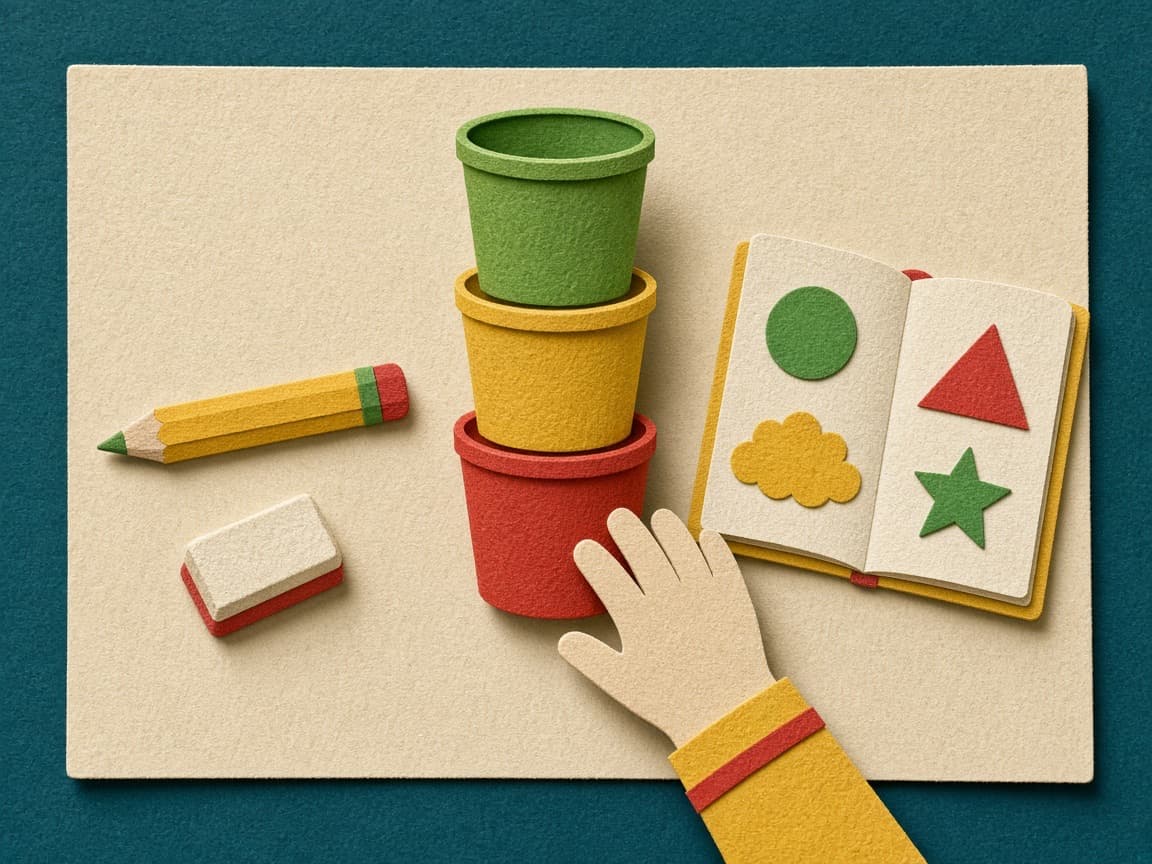
Each child has a green, yellow and red card or cup on the desk and shows the colour that matches how they are getting on: green for "I've got it", yellow for "I'm not sure", red for "I'm stuck". During independent work you can see who needs help without anyone having to raise a hand.
- Ages: 5 and up
- Time: Runs in the background
- Tip: Start with the reds, then ask a green to help a yellow.
6. Exit tickets
At the end of a lesson each child answers one or two questions on a slip of paper or sticky note before leaving. Sort them into three piles (got it, partly, not yet) and you have your groups for the start of the next lesson.
- Ages: 7 and up (younger children can draw or circle a picture)
- Time: 3–5 minutes
- Tip: One well-chosen question beats three rushed ones.
7. Think, pair, share
Pose a question, give everyone silent thinking time, let pairs compare answers, then ask a few pairs to share. Listening to the pairs as you walk round tells you far more than the two or three answers you hear at the end.
- Ages: 5 and up
- Time: 3–5 minutes
8. No hands up, with wait time
Ask the question, wait three to five seconds, then choose who answers. Because anyone may be asked, everyone has to think. Pair it with a friendly fallback ("Ask a friend, then I'll come back to you") so it never feels like a trap.
- Ages: 5 and up
- Time: Seconds
- Tip: Use name sticks or a random picker so children can see it is fair.
9. Show me with fingers
For a quick choice between up to five options, children hold up one to five fingers against their chest. It needs no materials at all, which makes it ideal for kindergartens, PE and outdoor lessons.
- Ages: 3 and up
- Time: 10–30 seconds
10. Four corners
Label the corners of the room A, B, C and D (or with pictures), ask a question and send children to the corner that matches their answer. Each group then explains its choice. Movement helps younger children stay focused, and the groups double as discussion groups.
- Ages: 4 and up
- Time: 3–5 minutes
11. Explain it to a partner
One child explains a new idea or method to a partner in their own words, then they swap. Explaining exposes gaps quickly, both for the child talking and for you listening in.
- Ages: 6 and up
- Time: 2–4 minutes
12. Retrieval starter
Open the lesson with three to five short questions on material from last lesson, last week and last month. It shows you what has stuck, and the act of recalling strengthens memory (the "testing effect"). Keep it low-stakes: no marks, just answers you check together.
- Ages: 6 and up
- Time: 5 minutes
At a glance
| Technique | Ages | Time | Best for |
|---|---|---|---|
| Hinge question | 6+ | 1–2 min | Deciding whether to move on |
| Answer cards | 4+ | 30 sec | Whole-class multiple choice |
| Mini whiteboards | 5+ | 1–3 min | Open answers, showing working |
| Thumbs | 4+ | 10 sec | Confidence (not understanding) |
| Traffic lights | 5+ | Ongoing | Spotting who is stuck |
| Exit tickets | 7+ | 3–5 min | Planning the next lesson |
| Think, pair, share | 5+ | 3–5 min | Reasoning and discussion |
| No hands up | 5+ | Seconds | Keeping everyone thinking |
| Fingers | 3+ | 10–30 sec | No materials, young children |
| Four corners | 4+ | 3–5 min | Movement and discussion |
| Explain to a partner | 6+ | 2–4 min | Checking explanations |
| Retrieval starter | 6+ | 5 min | Long-term memory |
Checking every pupil without student devices
The fastest techniques above (cards, fingers, whiteboards) share one weakness: you see the answers for a moment, and then they are gone. In a class of 25 it is hard to remember who chose which option, and impossible to compare with last week.
Camera-based answer cards solve this. Each child holds up a printed card with a marker pattern, and the way they turn the card (which edge is at the top) shows their answer. The teacher points a phone or tablet at the class, and every answer is captured and counted in seconds. Children need no devices, no logins and no screen time, which matters in kindergarten and early primary.
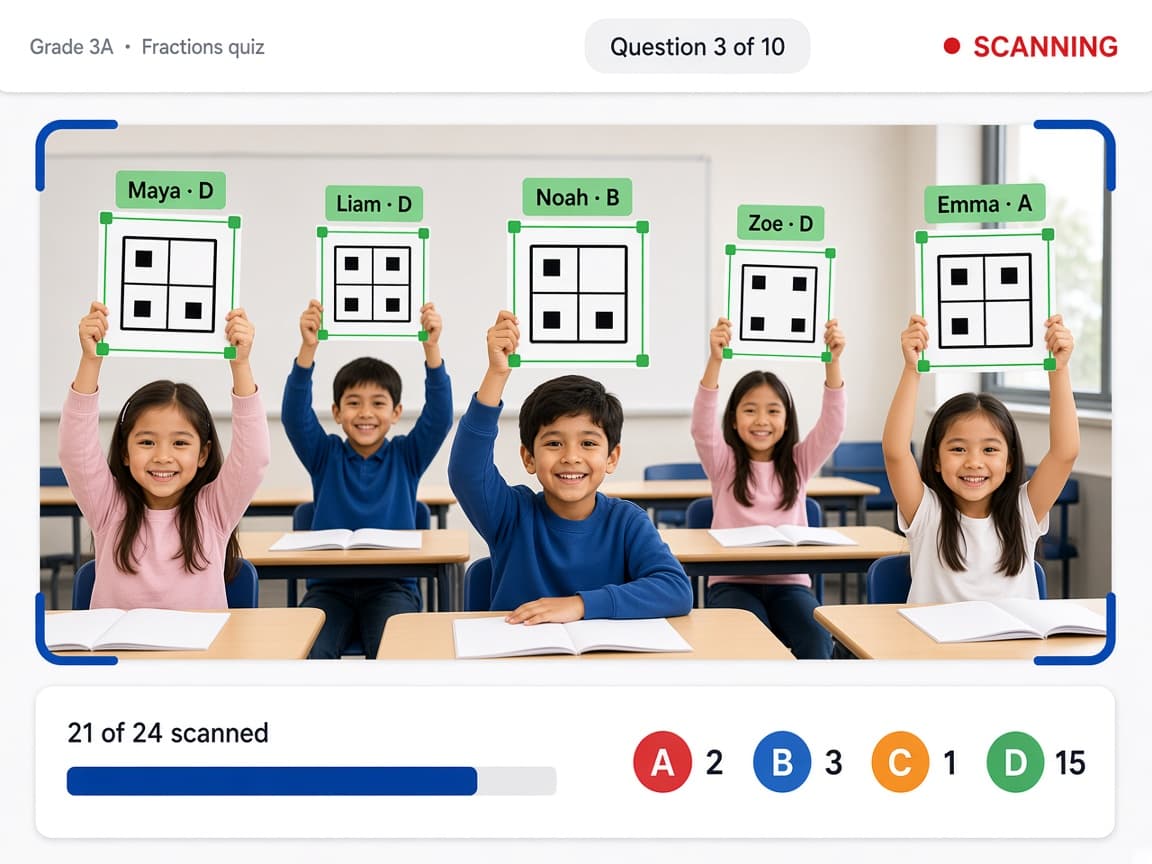
This is how SmartEduTrack's card scanning works. Because each answer is saved against the child's name, the quick check you did in two minutes also becomes part of their progress record, without any marking.
Turning answers into next steps
Collecting answers is the easy part. The value comes from what you do in the next five minutes. A simple rule of thumb, based on Rosenshine's 80% success rate:
- About 80% or more correct: move on. Give the few who struggled a quick word or a short task while the others continue.
- Between about half and 80% correct: re-explain in a different way (a new example, a picture or a model), then ask a second hinge question to check again.
- Under about half correct: stop and reteach. The problem is usually the explanation or a missing earlier step, not the children.
Look at which wrong answer was popular as well as how many were right. If most mistakes point to the same misconception, address that misconception directly with the whole class.
Over a term, these quick checks add up to a detailed picture of each child. Our guide to tracking children's learning progress and development explains how to turn that picture into useful records and conversations with parents.
Common mistakes to avoid
- Asking "Any questions?" or "Does everyone understand?" Children who are lost are the least likely to say so.
- Only hearing from volunteers. The children who put their hands up are usually the ones who already know.
- Grading the checks. As soon as a formative check counts towards a mark, children start guessing what you want instead of showing what they think.
- Collecting data you never use. If you will not change anything based on the answer, skip the question and save the time.
- Questions that are too easy. If everyone always gets it right, the question tells you nothing. Aim for questions that some children will get wrong.
Start small
You do not need all 12 techniques. Pick one fast technique (answer cards or fingers) and one end-of-lesson technique (exit tickets), use them every day for two weeks, and notice how your planning changes. If you want to go further, read why a student response system is worth using and how to set one up for your first lesson.
Sources
- Black, P. and Wiliam, D. (1998). Inside the Black Box: Raising Standards Through Classroom Assessment. Phi Delta Kappan, 80(2), 139–148.
- Education Endowment Foundation. Feedback, Teaching and Learning Toolkit.
- Rosenshine, B. (2012). Principles of Instruction: Research-Based Strategies That All Teachers Should Know. American Educator, 36(1).
- Roediger, H. L. and Karpicke, J. D. (2006). Test-Enhanced Learning: Taking Memory Tests Improves Long-Term Retention. Psychological Science, 17(3).
- Wiliam, D. (2011). Embedded Formative Assessment. Solution Tree Press.
Written by
Ivailo Ivanov, Teacher
Ivailo Ivanov is a teacher who writes about classroom practice, formative assessment and tracking children's learning progress.
Keep reading

Child development
How to Track Children's Learning Progress and Personal Development (Ages 3–12)
A practical guide for teachers and parents: what to observe in children aged 3–12, simple ways to record progress, spotting patterns and when to get help.
Student response systems
Why Use a Student Response System? Benefits, Evidence and How to Start
What a student response system is, the research behind it, how cards compare with devices and hand-raising, and a 5-step plan for your first lesson.